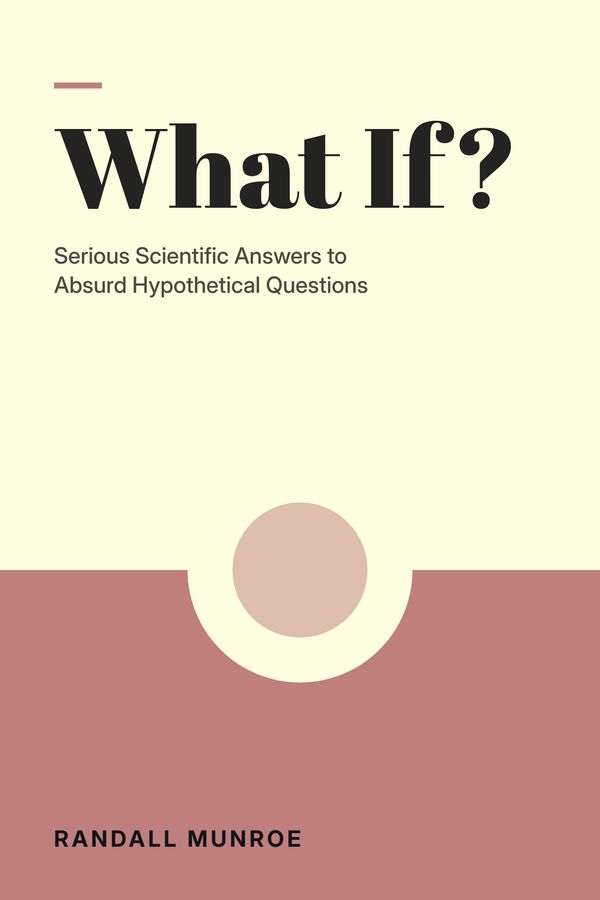
What If? summary
Serious Scientific Answers to Absurd Hypothetical Questions
The book in one sentence
Absurd hypothetical questions, answered with real physics and honest math, turn into a doorway for understanding how the universe actually works and how scientists really think.
Overview
Randall Munroe takes the ridiculous questions most people brush off, like what happens if you pitch a baseball at almost the speed of light, and answers them with real physics. The result is funny, but it also shows you how scientists actually think when they face a problem nobody has solved.
Key idea 1: Serious Answers to Silly Questions
Munroe built his whole book on a strange promise: he would treat goofy questions with the same care a scientist gives to real research. A reader once asked what would happen if you tried to hit a baseball pitched at ninety percent of the speed of light. Most people would laugh and move on. Munroe sat down and worked it out. At that speed the ball would smash into the air in front of it so hard that the atoms would fuse, releasing a burst of energy like a nuclear blast. The batter, the pitcher, and most of the stadium would be gone. By the rules of the game, the umpire would then have to call it a hit batsman.
The lesson is not really about baseball. It is about a way of thinking. When you take a silly setup and follow the actual physics wherever it leads, you learn real things about how the world works. The question is a doorway. Walk through it seriously and you end up studying fusion, air pressure, and the speed of light, all because someone wondered about a fast pitch.
Here is how to use this idea. The next time a strange what-if pops into your head, do not swat it away. Ask what would really have to happen for it to play out. Break the problem into steps you can reason about. What forces are involved? What would move, heat up, or break? You will often surprise yourself with how far plain logic can carry you.
One nuance worth holding onto: the goofiness is not a weakness of this method, it is the fuel. A boring question makes you bored. A wild one makes you curious enough to actually dig in. Munroe found that absurd questions pull people into learning physics they would never study on purpose. The silliness lowers your guard, and real understanding sneaks in behind it. That quiet trick runs under every chapter of the book.
7 more key ideas in the app
- 2. Estimate Anything with Fermi Math
- 3. Energy Is Usually the Killer
- 4. Big Numbers Don't Behave Like You Expect
- 5. Ordinary Things Get Deadly at Extremes
- 6. Often the Answer Is You Would Die
- 7. Guess, Then Check
- 8. Curiosity Is Worth Protecting
Did you know?
- What If? grew out of Randall Munroe's popular webcomic xkcd and a related feature where he answered reader questions with real science.
- Munroe worked as a roboticist at NASA before becoming a full time cartoonist and writer.
- The book was published in 2014 and became a number one New York Times bestseller.
 A Brief History of Time
 A Short History of Nearly Everything
 An Immense World
 Astrophysics for People in a Hurry
 Braiding Sweetgrass