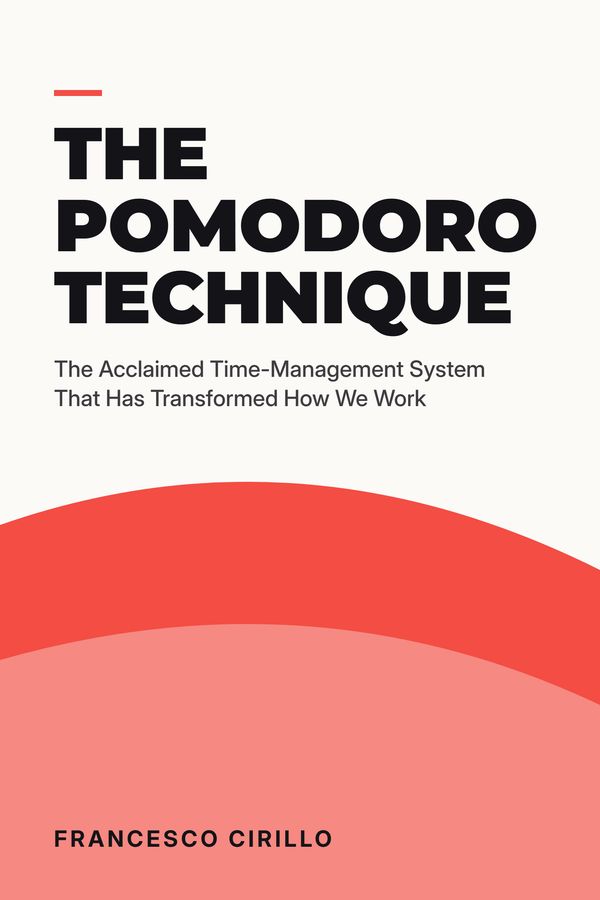
The Pomodoro Technique summary
The Acclaimed Time-Management System That Has Transformed How We Work
The book in one sentence
Break your work into focused 25-minute blocks with built-in breaks so you stop fighting the clock and finish more with a calmer mind.
Overview
Francesco Cirillo turned a tomato-shaped kitchen timer into one of the most popular focus methods in the world. The idea is small: work in 25-minute blocks, take real breaks, and plan your day in those blocks. This book shows how that simple rhythm quiets anxiety and helps you actually finish things.
Key idea 1: The Ticking Clock Is Not Your Enemy
Francesco Cirillo was a first-year university student who could not get through his books. He would sit down to study, then look up an hour later with nothing to show for it. His mind wandered, he checked the time, he felt guilty, and the guilt made focus even harder. One day he made himself a small bet. Could he study with full attention for just ten minutes? He grabbed a kitchen timer shaped like a tomato, which is pomodoro in Italian, wound it up, and started. That little tomato gave the whole method its name.
Cirillo's main insight was about time itself. He says we experience time in two ways. One is time as events, the ticking of a clock, the calendar, the sense of moments slipping past. The other is time as duration, the felt sense of being inside a task while you work. The first kind creates anxiety. When you keep watching the clock, you feel time running out, and that pressure scatters your attention. Students know this feeling well the night before an exam. The awareness of time passing becomes the very thing that stops you from using it.
The timer flips that relationship. Once you wind it up and start, the clock stops being a threat you keep glancing at. The timer is now watching the time for you, so you are free to sink into the work. You are not fighting the passing minutes anymore. You have handed that job to a small machine on your desk, and it will tell you when to stop.
To use this, notice how often you check the clock or your phone while working. Each check is a tiny hit of the anxiety Cirillo is talking about. Set a timer instead and agree with yourself that you will not look at the time until it rings.
The nuance is that the goal is not to squeeze more minutes out of the day. It is to change how time feels while you work, from an enemy counting down to a quiet ally that frees you to concentrate.
7 more key ideas in the app
- 2. One Pomodoro Is 25 Minutes of One Thing
- 3. Take Breaks Before You Burn Out
- 4. Protect the Block From Interruptions
- 5. Plan Your Day in Pomodoros
- 6. Track What Actually Happened
- 7. Learn to Guess How Long Things Take
- 8. The Point Is a Calmer Mind, Not a Fuller Day
Did you know?
- The technique is named after the tomato-shaped kitchen timer that Cirillo used as a university student, since pomodoro means tomato in Italian.
- Cirillo developed the method in the late 1980s while studying at university in Italy and struggling to focus on his books.
- A classic pomodoro is 25 minutes of focused work followed by a short break, with a longer break after every four pomodoros.
 The Productivity Project
 Time Smart
 Two Awesome Hours
 When
 Willpower