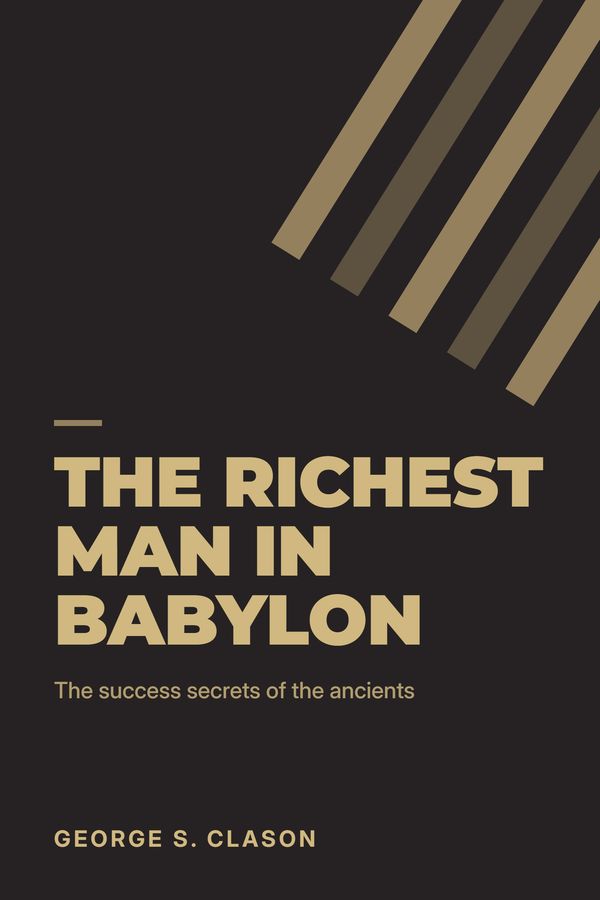
The Richest Man in Babylon summary
The success secrets of the ancients
The book in one sentence
Pay yourself first (save 10%), make money multiply, guard it from loss, and increase your ability to earn.
Overview
George Clason wraps timeless money lessons in stories of ancient Babylon, where a humble scribe named Arkad becomes the richest man in the city. He gets there not by luck or inheritance, but by following a few plain rules anyone can use: save part of all you earn, and put it to work.
Key idea 1: Pay Yourself First
The base of Arkad's whole fortune is one rule he calls 'a part of all you earn is yours to keep.' At first this sounds obvious. Surely everything you earn is already yours? Clason's point is that almost none of it actually stays with you. The moment money arrives it flows straight back out to the baker, the landlord, the sandal-maker, and everyone else, leaving you with nothing of your own.
Arkad learned this as a poor scribe, carving laws into clay tablets for little pay. He asked a rich moneylender named Algamish how to become wealthy, and Algamish gave him this one rule: set aside a tenth of all you earn, and that tenth is yours to keep. Arkad started doing it, paying himself first before any other expense, and slowly that hoard grew into the seed of everything he later built. Algamish's deeper lesson was that the gold you keep is the start of your fortune, while the gold you spend is gone for good.
What makes the rule work is its plainness. You do not need a high income to begin. You take a tenth off the top of whatever you earn, before you pay a single bill, and you do not touch it for ordinary spending. Clason's reassuring observation is that most people barely miss the tenth they set aside, because expenses quietly expand to fill whatever money is left available anyway. If you can live on ten parts, you can live on nine.
To apply it, take a tenth out of your very next paycheck and move it somewhere separate, out of reach of your daily spending, before you pay rent, bills, or anything else. Treat it as money that no longer exists for spending. The common mistake is waiting until the end of the month to save whatever is left, which is almost always nothing, because the bills and wants will gladly consume all of it. Pay yourself first, guard that tenth, and let it become the foundation that everything else in the book builds on.
7 more key ideas in the app
- 2. Control Your Expenses
- 3. Make Your Gold Multiply
- 4. Guard Your Capital From Loss
- 5. Own Your Home
- 6. Insure A Future Income
- 7. Increase Your Earning Power
- 8. Make Your Debts Manageable
Did you know?
- The Richest Man in Babylon began not as a book but as a series of informational pamphlets Clason wrote in the 1920s for banks and insurance companies to hand out to customers as financial education.
- Babylon really was one of the wealthiest cities of the ancient world, and its scribes recorded loans, interest, and contracts on clay tablets, some of the earliest written financial records in human history.
Featured in: Money Starter Pack, Wealth Mindset, Think like an investor (guide)
 The Simple Path to Wealth
 The Snowball: Warren Buffett and the Business of Life
 The Total Money Makeover
 The Warren Buffett Way
 Think and Grow Rich