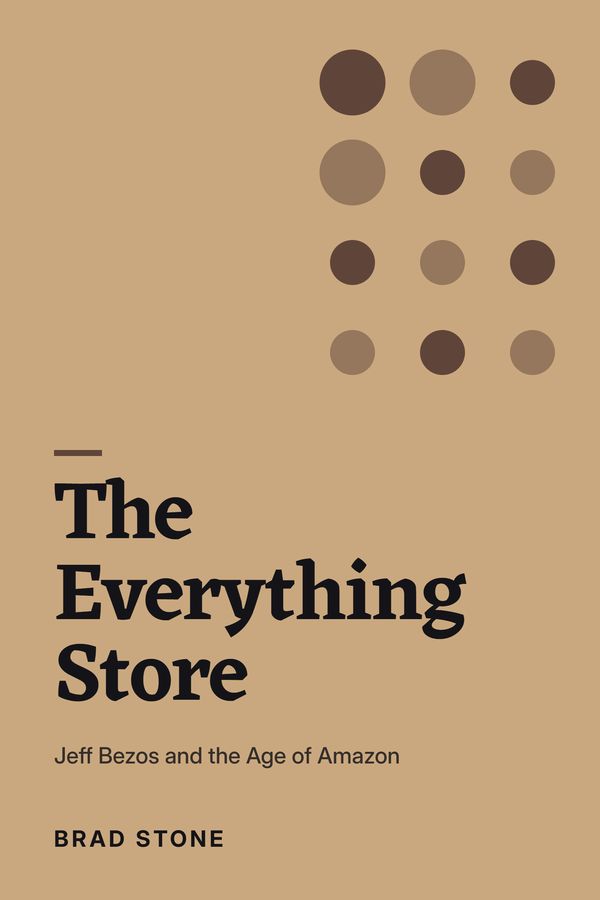
The Everything Store summary
Jeff Bezos and the Age of Amazon
The book in one sentence
Amazon grew into the everything store because Jeff Bezos obsessed over customers, thought in decades instead of quarters, and kept reinventing his own business before rivals could.
Overview
Brad Stone tells the inside story of how Jeff Bezos turned a small online bookshop into a company that sells almost everything. It is a look at relentless ambition, long-term bets, and a culture built to obsess over customers. You learn what it really took to build Amazon.
Key idea 1: The Regret Minimization Test
In 1994 Jeff Bezos had a great job. He was a young senior vice president at a Wall Street firm called D.E. Shaw, earning a big salary and on track for more. Then he read that the web was growing by more than 2,000 percent a year. He wanted to build a store on it. But leaving meant walking away from a guaranteed bonus and a safe future for a risky idea most people had never heard of.
So he built himself a simple thinking tool. He calls it the regret minimization framework. He pictured himself at 80 years old, looking back on his life, and asked which choice he would regret more. He knew he would not regret trying to build an internet company, even if it failed. He was sure he would regret never trying at all. Once he framed it that way, the decision felt easy. The fear of a failed startup shrank next to the fear of a lifelong 'what if.'
Stone tells how Bezos and his wife MacKenzie then flew to Texas, picked up a car, and drove west while she took the wheel and he typed the business plan on a laptop. He worked out the numbers for the company on that road trip. The garage in a Seattle suburb came next.
The lesson here is about how you weigh a scary choice. Most people judge a risk by the odds of failing this year. Bezos judged it by how he would feel decades later. That flips the math. A short-term loss looks small when you measure it against a lifetime of wondering.
To use this yourself, do not ask 'what is the safe move right now.' Ask what your future self, near the end, would wish you had done. The answer is usually clearer and braver than the one fear hands you today.
One nuance is that this test works best for choices you can walk away from if they flop. Bezos knew a failed startup would not ruin his life. The framework is not a push to bet everything. It is a way to stop letting short-term fear cancel a chance you would mourn forever.
7 more key ideas in the app
- 2. Start With the Customer
- 3. The Flywheel Effect
- 4. Think Long, Get Big Fast
- 5. Why It Started With Books
- 6. Frugality Breeds Invention
- 7. Disrupt Yourself First
- 8. A Culture Built on Data
Did you know?
- Jeff Bezos founded Amazon in 1994 and started it out of a garage in a Seattle suburb.
- The company was almost named Cadabra, and Bezos also registered Relentless.com, which still redirects to Amazon today.
- Amazon sold its first book in 1995 but did not post a meaningful annual profit for years after going public.
 The First 90 Days
 The Four
 The Hard Thing About Hard Things
 The Innovator's Dilemma
 The Lean Startup