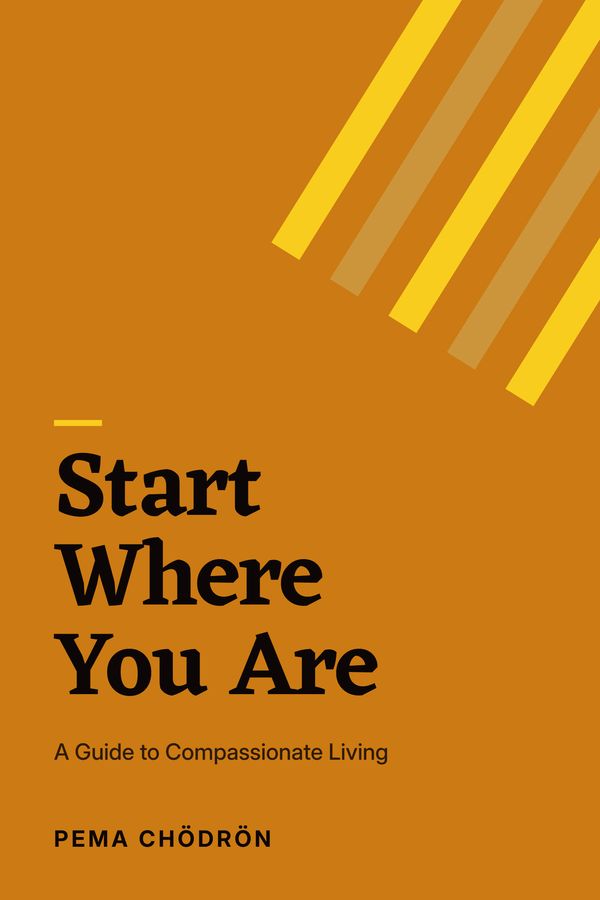
Start Where You Are summary
A Guide to Compassionate Living
The book in one sentence
You do not have to fix yourself first; using ancient mind-training slogans and the practice of tonglen, you can meet your life exactly as it is with unconditional kindness and turn every hard feeling into the doorway to an open heart.
Overview
Pema Chodron is an American Buddhist nun, and she is refreshingly honest about how hard being human is. This book takes ancient mind-training slogans and turns them into simple daily practice. Its message is bold: you do not need to fix yourself first. You can begin, right now, exactly as you are.
Key idea 1: Start Where You Are
Most self-help starts with a promise: fix these flaws, and then your life will work. Pema Chodron flips that on its head. The whole path, she says, begins with accepting yourself right now, mess and all. You do not clean yourself up first and then start. You start dirty. That is the only place anyone ever begins.
This comes from an old set of Tibetan mind-training slogans, and one of them is simply, start where you are. Chodron points out that we spend huge amounts of energy wishing we were somewhere else. We want to be calmer, kinder, further along. That wishing is a kind of quiet violence. It says the person you are today is not good enough to work with.
Her answer is that your present state, whatever it is, is the raw material of practice. Feeling jealous? Good, work with that. Feeling scared or petty or bored? That is your path today. There is nothing to wait for and no better version of you to become first. The confused, ordinary you is the one who gets to wake up.
She tells how students often come to her wanting to skip ahead to peace and bliss. They treat their anger and fear as obstacles blocking the real practice. She keeps turning them back around. The anger is not in the way. The anger is the way. Whatever is happening in you right now is the doorway.
To apply this, notice the next time you catch yourself thinking, I will really live once I am less anxious, or thinner, or more together. Then gently drop that story and ask a different question. What is here right now, and can I be with it? You work with the actual weather of your mind, not the weather you wish you had.
One nuance: starting where you are is not the same as giving up. Accepting yourself is not approving of everything you do. It is the honest ground you have to stand on before any real change is possible. You cannot grow from a place you refuse to admit you are standing in. So you begin here, because here is the only place there is.
7 more key ideas in the app
- 2. Make Friends With Yourself
- 3. Find the Soft Spot
- 4. Breathe It In
- 5. Lean Into the Sharp Points
- 6. Drive All Blames Into One
- 7. Be Grateful to Everyone
- 8. Abandon Hope
Did you know?
- Start Where You Are was published in 1994 and draws on the lojong, or mind-training, teachings of Tibetan Buddhism.
- Pema Chodron is an American-born Buddhist nun and was one of the first Western women fully ordained in the Tibetan tradition.
- Her main teacher was Chogyam Trungpa Rinpoche, the Tibetan master who founded Naropa University in Colorado.
 Stillness Is the Key
 The Headspace Guide to Meditation and Mindfulness
 The Heart of the Buddha's Teaching
 The Mind Illuminated
 The Miracle of Mindfulness