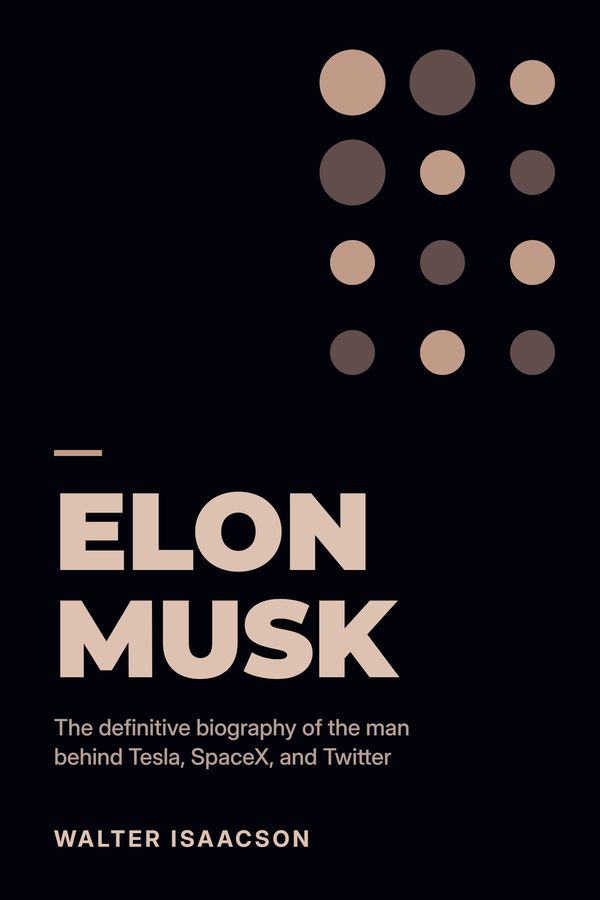
Elon Musk summary
The definitive biography of the man behind Tesla, SpaceX, and Twitter
The book in one sentence
Musk's world-changing companies and his personal cruelty grow from the same wounded, risk-hungry, first-principles drive, and you cannot cleanly separate the genius from the damage.
Overview
Walter Isaacson shadowed Elon Musk for two years, watching him run Tesla, SpaceX, and Twitter from the factory floor. The result is a close, unflinching look at how a hard, driven, and often difficult man builds companies that reach for space and reshape whole industries, and at the childhood pain that fuels him.
Key idea 1: The Pain That Built Him
Isaacson opens with a warning from Musk himself. Musk told him that the demons that drive people also shape the products they make, and that you cannot really separate the two. To understand the companies, Isaacson says, you have to understand the wounded boy underneath.
Musk grew up in South Africa under apartheid, in a world of casual violence. He was bullied badly at school, once beaten so hard he was thrown down a flight of stairs and hospitalized. Home offered little safety. After his parents divorced, Elon chose to live with his father, Errol, a decision he came to see as a mistake. Isaacson describes Errol as a brilliant but cruel man who would deliver long, berating lectures, praising his son one moment and tearing him apart the next. Musk has said the psychological abuse left deep marks.
That upbringing wired him in two ways. First, it gave him an unusually high tolerance for pain and stress. Situations that would break most people feel almost normal to him, because chaos and threat were the water he grew up in. Second, it left him with what Isaacson calls a demon mode, a cold, harsh state he can drop into, echoing his father even as he swore never to become him.
As a lonely, obsessive kid, Musk retreated into science fiction and comics, into big questions about the survival of humanity. Those childhood obsessions, going to Mars, saving the species, became the actual missions of his companies decades later. The escape fantasies turned into a business plan.
The lesson Isaacson draws is uncomfortable. Musk's greatest strengths and his worst behavior come from the same source. You cannot cleanly take the drive without the damage. For readers, the point is not to copy the pain but to see the pattern. The forces that push people to extraordinary achievement are often the same forces that make them hard to be around. Understanding someone, or yourself, means looking honestly at where the drive comes from.
7 more key ideas in the app
- 2. Think From First Principles
- 3. The Algorithm
- 4. A Maniacal Sense of Urgency
- 5. Bet Everything, Risk It All
- 6. Control the Whole Stack
- 7. The Hardcore Culture
- 8. The Man and the Machine
Did you know?
- Isaacson embedded with Musk for two years, shadowing him at Tesla, SpaceX, and Twitter, and interviewing his family, friends, and rivals for the book.
- In 2008 both SpaceX and Tesla were nearly bankrupt at the same time, and SpaceX's fourth rocket launch, which had to succeed or the company was finished, reached orbit while Tesla's rescue funding closed in the final hours of the year.
- Musk found that the raw materials in a rocket cost only about two percent of the purchase price, which convinced him SpaceX could build launch vehicles far more cheaply.
Featured in: Great Lives
 Greenlights
 Hidden Figures
 I Know Why the Caged Bird Sings
 Into the Wild
 John Adams