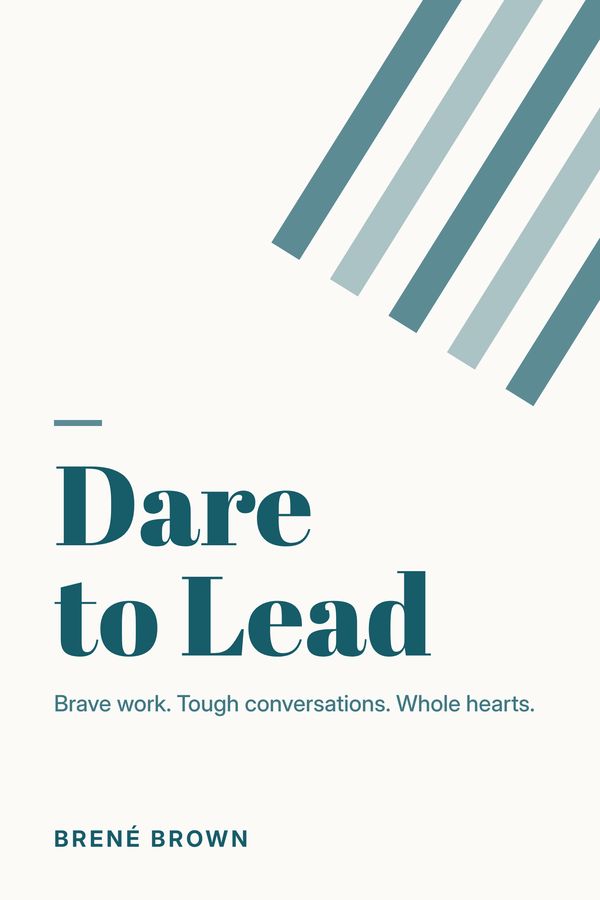
Dare to Lead summary
Brave work. Tough conversations. Whole hearts.
The book in one sentence
Daring leadership is rooted in vulnerability, clear values, trust, and the ability to rise after setbacks.
Overview
We picture great leaders as unshakeable and armored, never showing a crack. Brené Brown, drawing on two decades of research, makes the opposite case: the most effective leaders are brave enough to be vulnerable, to say I do not know, and to have the hard conversations everyone else avoids.
Key idea 1: Vulnerability Is Courage
Brown's central, most surprising claim is that vulnerability and courage cannot be pulled apart. Vulnerability is the feeling we get during uncertainty, risk, and emotional exposure: pitching an unproven idea, giving someone hard feedback, asking for help, owning a mistake out loud, trying something you might fail at. Most of us were taught early that vulnerability is weakness, something to armor up against and hide. Two decades of Brown's research flip that on its head. When she asked thousands of people to describe an act of courage they had witnessed or done, every single story had vulnerability built into it. There was no example of bravery, in any context, that did not involve uncertainty, risk, or emotional exposure. You cannot have one without the other. A leader who refuses to ever be vulnerable, who never admits doubt, never asks a question they do not know the answer to, never takes an emotional risk, is not actually strong. They are just hidden, and hidden leaders cannot inspire or connect, because connection requires being seen. Brown is careful about what vulnerability is not. It is not oversharing, not spilling your feelings to anyone who will listen, and not weakness or a lack of boundaries. It is the willingness to show up and be seen when you cannot control the outcome. She points out that the people we admire most for their bravery, the ones who spoke an unpopular truth or took a big risk, were all willing to be seen with no guarantee of success. That is the cost of courage, and there is no discount. One concrete example she uses is asking for help. Many of us see needing help as proof we are not good enough, so we struggle alone. Brown reframes it: if you believe asking for help is weakness, then you also, secretly, judge other people who ask, which quietly poisons trust on a team. The practical shift is to notice that exposed, uncertain, slightly sick feeling and reread it. It is not a signal that you are failing. It is the signal that you are standing at the doorway to courage, about to do something that matters. A common mistake is waiting until you feel certain and safe to act. By definition, that moment never comes for anything brave.
7 more key ideas in the app
- 2. Armored vs. Daring Leadership
- 3. Rumbling With Vulnerability
- 4. Live Into Your Values
- 5. Trust Is Built in BRAVING
- 6. Clear Is Kind
- 7. Learning to Rise
- 8. Empathy Disarms Shame
Did you know?
- Dare to Lead is grounded in Brown's interviews with hundreds of senior leaders across industries about what gets in the way of courageous leadership.
- Brown's earlier TED talk, The Power of Vulnerability, became one of the most-viewed TED talks of all time, with well over 60 million views.
Featured in: Lead With Confidence, Leadership Library, Lead like a pro (guide)
 Dare to Serve
 Death by Meeting
 Developing the Leader Within You
 Discipline Equals Freedom
 Extreme Ownership