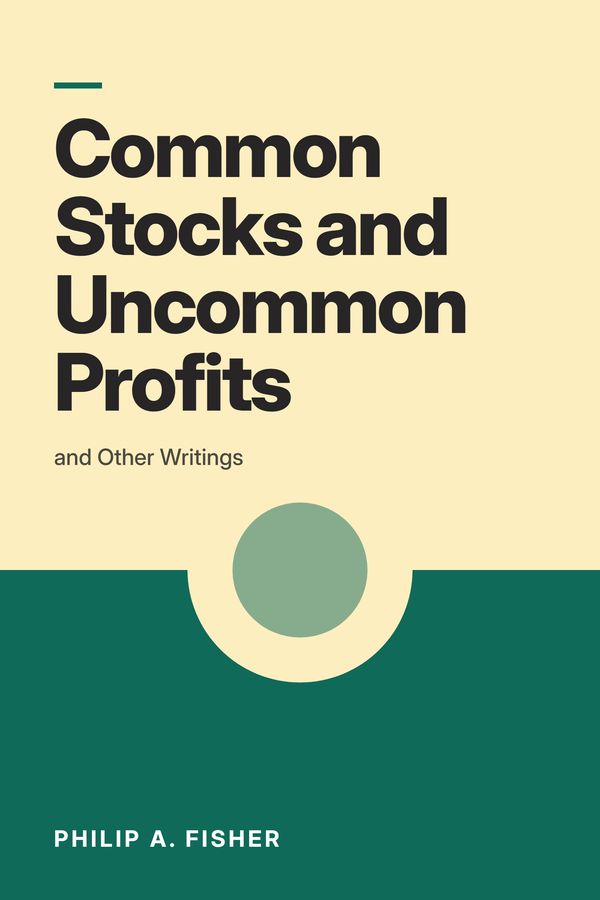
Common Stocks and Uncommon Profits summary
and Other Writings
The book in one sentence
Find a few truly outstanding growth companies through deep detective research, then hold them patiently for decades.
Overview
Most investors chase cheap stocks and quick flips. Philip Fisher played a different game. He hunted for a handful of truly great companies, did deep detective work to find them, and then held on for decades while they grew many times over.
Key idea 1: Do the Detective Work
Most people research a stock by reading its reports and glancing at the numbers. Fisher thought that was lazy. His trick was a method he called "scuttlebutt." The idea is simple. You go out and talk to real people who know the company, and you build a picture no annual report can give you.
Who do you talk to? Fisher cast a wide net. He asked the company's customers if they loved the product or just tolerated it. He asked suppliers how the company treated them. He asked former employees why they left. He even asked competitors a sneaky question: if you could not own your own company, which rival would you buy? The answer often pointed straight at the best business in the industry, because even enemies respect real strength.
Here is why this works. All these people see the company from a different angle. A customer knows if the product truly beats the alternatives. A rival knows who they secretly fear. Stack up enough of these views and a clear story appears, one that the official filings would never tell you. You start to sense whether a company has a real edge or just good marketing.
To use this yourself, treat a company like a person you might go into business with. Ask around. Read reviews from actual users. Talk to people in the industry. Notice whether the folks who deal with the company come away impressed or annoyed. You do not need Wall Street connections. You need curiosity and a willingness to dig.
The nuance is patience. Scuttlebutt takes time and turns up messy, mixed opinions. No single conversation gives you the answer. You are looking for a pattern that repeats, not one loud voice. Fisher warned that this work is slow, but he believed it was the reason he could spot great companies years before the crowd noticed them.
7 more key ideas in the app
- 2. A Checklist for Great Companies
- 3. Bet on the People
- 4. Let Winners Keep the Cash
- 5. Time the Company, Not the Economy
- 6. The Best Time to Sell Is Almost Never
- 7. Own a Few, Know Them Well
- 8. Do Not Quibble Over Pennies
Did you know?
- The book was first published in 1958 and was one of the first investing books to reach the New York Times bestseller list.
- Philip Fisher ran his own investment firm, Fisher & Co., which he founded in 1931.
- Warren Buffett has described his own style as 85 percent Benjamin Graham and 15 percent Philip Fisher.
 Debt: The First 5,000 Years
 Die With Zero
 Financial Freedom
 Financial Peace
 Fooled by Randomness