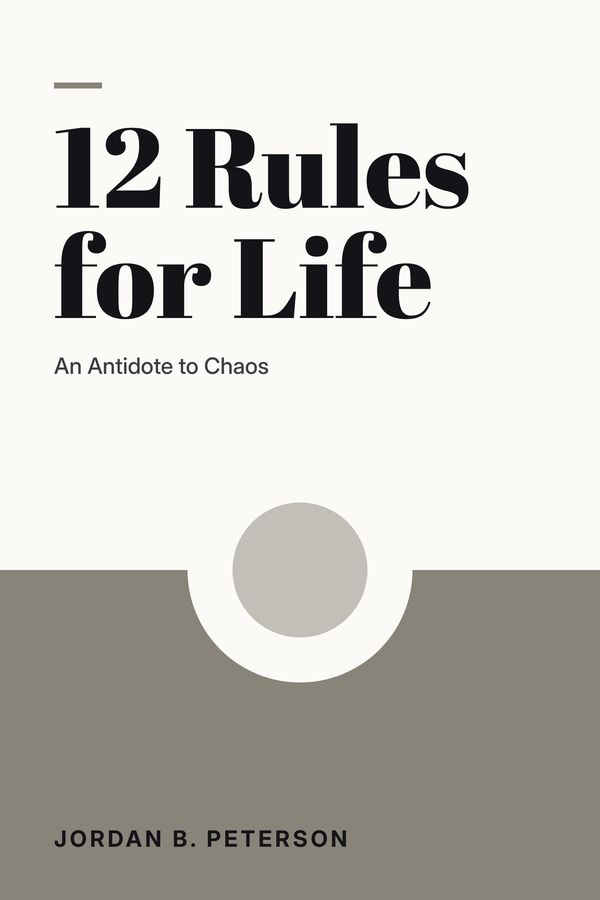
12 Rules for Life summary
An Antidote to Chaos
The book in one sentence
Take responsibility for your own life first, tell the truth, and aim at what is meaningful, and you can hold order against the chaos of living.
Overview
Jordan Peterson mixes psychology, myth, and hard-won advice into twelve rules for living with less chaos and more meaning. His core claim is simple: take responsibility for your own life first, tell the truth, and aim at something worth aiming at. The rules are practical, but they push you to grow up.
Key idea 1: Stand Up Straight
Peterson opens with lobsters, which sounds strange until you see his point. Lobsters have fought over territory for hundreds of millions of years, and they have a nervous system that tracks who wins and who loses. A lobster that wins fights fills up with serotonin, stands tall, and struts. A lobster that loses fills with a different chemical, curls up small, and slinks away. Humans are wired in a shockingly similar way. Your brain runs an ancient scoreboard that reads your body posture and your recent wins and losses, then adjusts how confident or defeated you feel.
This is why standing up straight is more than good manners. When you slump, hide, and speak softly, you signal defeat, and your own brain reads that signal and pumps out the chemistry of a loser. Other people read it too and treat you as lower status, which confirms the feeling and drags you further down. The loop feeds on itself. But it runs the other way as well. When you pull your shoulders back and stand tall, you tell your nervous system you are ready to face the world, and the chemistry starts to shift toward confidence.
Peterson does not mean you should fake being tough or pretend problems do not exist. He means you should accept that life has real burdens and then choose to carry them upright instead of cowering. Standing straight is a physical act, but it is also a decision to voluntarily face the challenges ahead rather than shrink from them.
To apply it, start with your body. Notice when you are hunched over your phone or folded into a chair, and straighten up. Speak your opinion instead of mumbling it. Make eye contact. These small acts send a message inward and outward that you are someone who can handle things. Over time the posture and the mindset reinforce each other.
The nuance worth holding is that this is not about dominating other people. It is about not defeating yourself before the day even starts. You cannot control every outcome, but you can control the stance you take toward your life, and that stance quietly shapes everything that follows.
7 more key ideas in the app
- 2. Care For Yourself Like Someone You Love
- 3. Compare Yourself To Who You Were
- 4. Fix Your Own House First
- 5. Aim At Meaning, Not The Easy Thing
- 6. Tell The Truth
- 7. Listen Like They Know Something
- 8. Raise Kids You Can Like
Did you know?
- The book grew out of an answer Peterson wrote on the website Quora, where his list of rules for life became wildly popular and led to the full book.
- Peterson worked for years as a clinical psychologist and a professor at Harvard and the University of Toronto, and much of the book draws on what he saw with real patients.
- The full title is 12 Rules for Life: An Antidote to Chaos, and it became an international bestseller after its 2018 release.
 As a Man Thinketh
 As You Think
 Atomic Habits
 Awaken the Giant Within
 Blink